Integral Vacuum casting
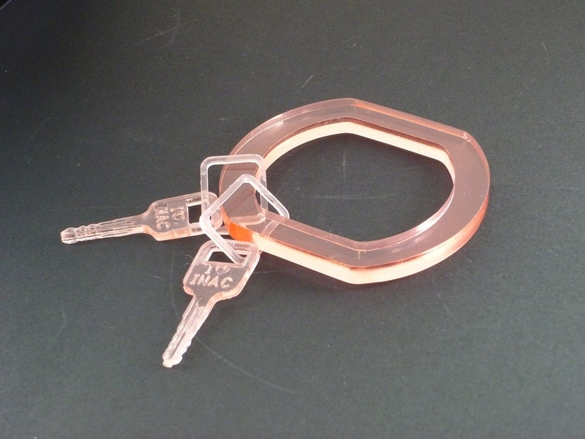
vacuum casted key sample
Vacuum casted key sample

          Integral Vacuum Casting

High Quality
Vacuum Casting

This sample demonstrates INAC’s integrated vacuum casting capability, where the entire component is vacuum casted in a single unit using colored transparent material. The integrated approach eliminates assembly seams and ensures consistent material properties throughout the finished prototype.

Master Model Production
Master models for vacuum casting reproduction can be manufactured using two methods based on your project requirements. CNC machining provides high-precision surfaces, while 3D printing enables complex shapes and ultra-short delivery times. Our experienced team will recommend the optimal production method for your specific needs.

Materials and Process
INAC’s vacuum casting process uses silicone rubber molds instead of metal molds. Liquid casting material is injected into the silicone mold in a vacuum environment, then cured and finished through deburring and gating. This method is suitable for producing colored products and enables extremely short delivery times when combined with in-house 3D printed master models.

Quality Assurance
At INAC, where quality comes first, every vacuum cast component is carefully inspected to verify surface finish and overall appearance quality, ensuring the prototype meets your design intent and visual requirements.

Design Support
Our experienced designers provide adequate support throughout the process until prototype completion. Contact us to discuss your integrated vacuum casting requirements.

Please contact us for other possible materials.
Please feel free to  contact us. Adequate support will be provided by our experienced designers until prototype completion

STEP5: Quality Assurance and Precision Inspection

A quality inspection is performed. At INAC, where quality comes first, we use CMMs, gauges, and other equipment for precision checks.

STEP4: Post-Processing and Finishing

Finishing is done by removing the supports, polishing, and applying transparency treatment. It is also possible to paint and apply plating to the formed product.

STEP3: UV-Laser Print Formation (SLA Process)

Output: The product is formed by irradiating the liquid with a laser beam of UV light and laminating it. The conditions of the external environment, such as room temperature and humidity, must be maintained.

STEP2: Model Program Generation and Support Adjustment

A program for model formation is created. Depending on the shape, it may be necessary to adjust the degree of tilt and the position of the supports.

STEP1: CAD File Submission

Upload your CAD to our online quoting platform.

STEP 3: Rendering and Scene Integration

We can also handle exterior modeling and interior structure design based on illustrations. After creating the 3D models, we can create a rendering to fit a scene. We can deliver images even if we do not proceed with production.

STEP 2: Detailed Design and 3D Modeling

Once the design is determined, drawings and 3D models will be created. The structure will be examined, taking into consideration not only the external design but also functionalities such as mating and sliding.

STEP 1: Initial Design Consultation

The first step is a meeting to discuss the project. Drawings are not required for this meeting. We will create a design from a sketch based on the overall image and concept that you have in mind.

STEP5: Quality Assurance and Inspection

We perform quality inspections. At INAC, where quality comes first, we use CMMs, gauges, and other equipment for precision checks.

STEP4: Post-Casting Finishing

Vacuum casting materials are cured and then taken out of the silicone rubber mold. Then we perform finishing such as deburring and gating, and they are made into finish products.

STEP3:Material Injuction

Liquid casting material is injected into the silicone rubber mold in a vacuum environment. 

STEP2: Mold Preparation

The silicone mold is cut open into a male and female mold, and the master model is removed.

STEP1: Mold Creation

The master model is fixed to a wooden frame and silicone is poured to create a mold.