stereolithography
Stereolithography
STEREOLITHOGRAPHY
INAC’s stereolithography service manufactures complex shapes and undercut geometries that are difficult or impossible to produce through traditional machining methods. Our capability ranges from small precision parts to large-scale components like automotive front grilles, demonstrating versatility across size requirements.
Car Front Grille Production Example
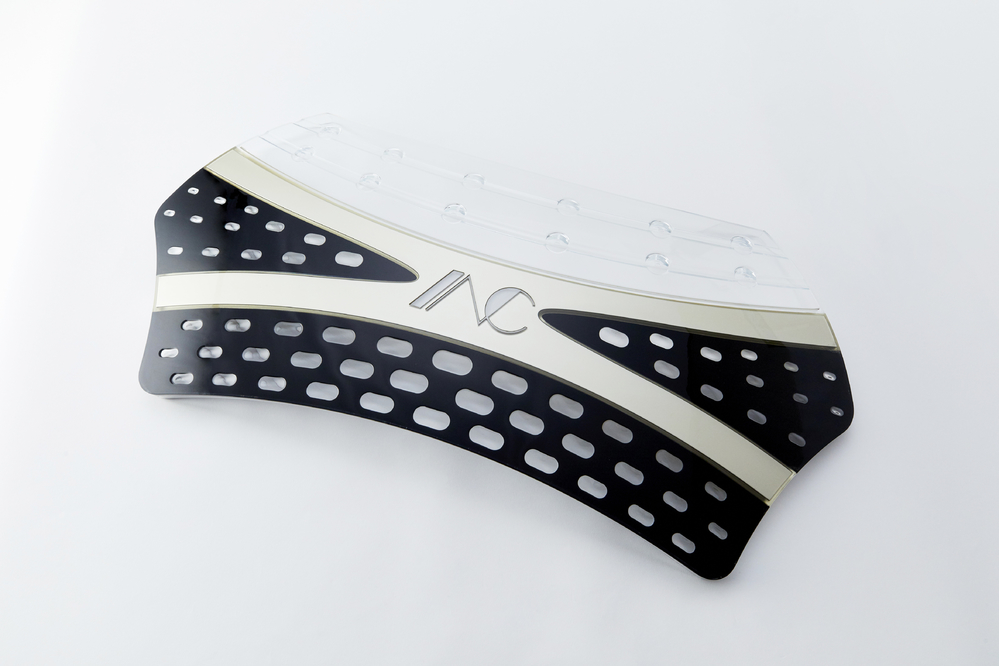
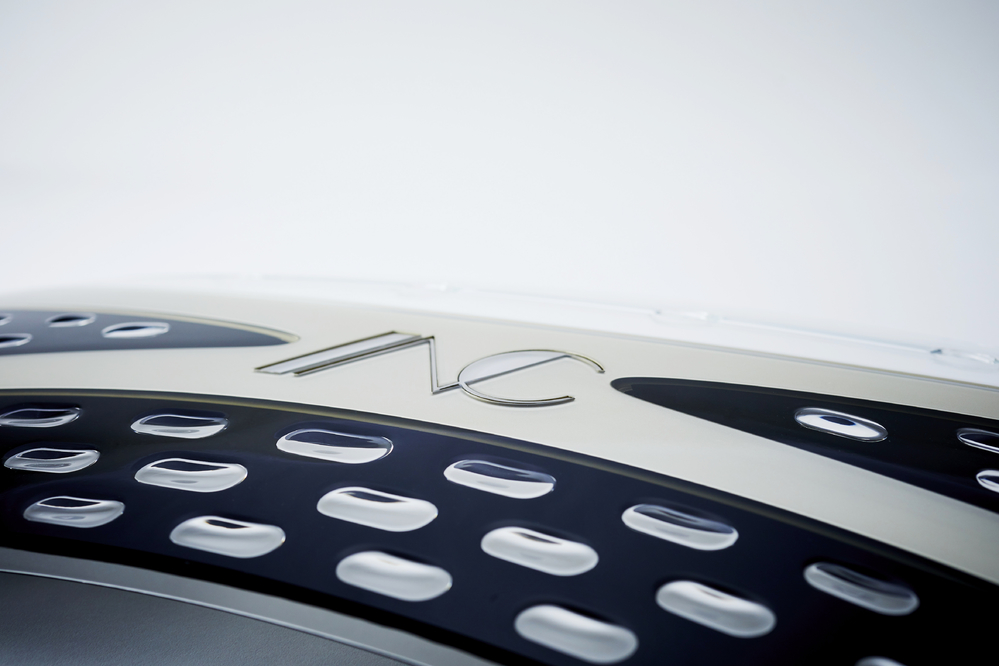
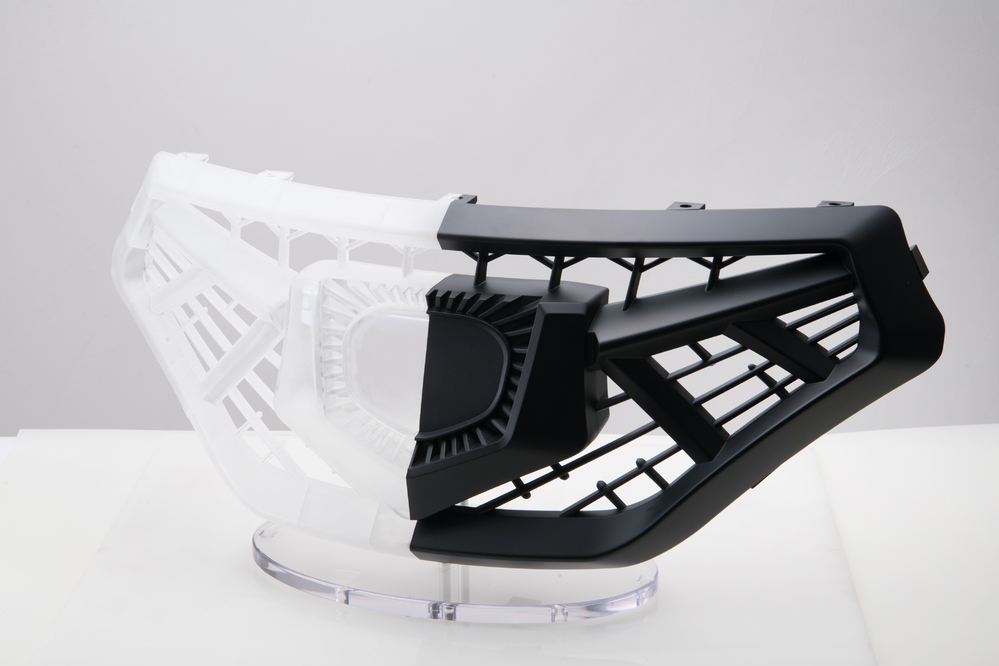
The original designed car front grille showcases INAC’s large-scale stereolithography capabilities. This mock sample has been subjected to advanced polishing and decoration processes, demonstrating the complete workflow from 3D printing through finishing. The product measures 15.75″ × 31.50″ × 6.10″, illustrating our ability to produce automotive-scale components with complex geometries.
ATOMm-8000 Stereolithography System
Components are manufactured using the ATOMm-8000 stereolithography system, which offers a modeling size of 23.62″ × 31.50″ × 15.75″. This large build volume enables production of substantial parts in single pieces, eliminating assembly seams and maintaining structural integrity throughout the component.
TSR-829 Material Properties
INAC uses TSR-829 material for stereolithography production. This is a highly transparent and moisture-resistant molding material known for having the highest degree of transparency and moisture resistance in the industry. The material’s transparency makes it ideal for visualization models, while its moisture resistance ensures dimensional stability over time.
Decoration and Finishing Options
Combination with decorations such as painting and evaporation plating is possible. After stereolithography production, finishing processes including supports removal, polishing, and transparency treatment are performed. Painting and plating decorations can be applied to the formed product according to project specifications, transforming transparent models into presentation-ready pieces.
Topology Optimization Modeling
INAC is able to produce models for topology optimization applications. This capability is valuable when confirming shapes at the development stage, allowing engineers to validate optimized structures and complex organic geometries that result from computational design processes.
Scalability from Small to Large Components
We can create from small parts to large parts like a grille size, providing complete stereolithography solutions across the size spectrum. This scalability allows designers to use the same manufacturing technology for component validation regardless of part dimensions.
Please feel free to contact us to discuss your stereolithography requirements for complex geometries, large-scale components, or topology-optimized structures.
Our experienced designers provide adequate support from concept through prototype completion.
Grill stereolithograply & decoration-2
Half Side Decoration Grill
