Secondary Decoration
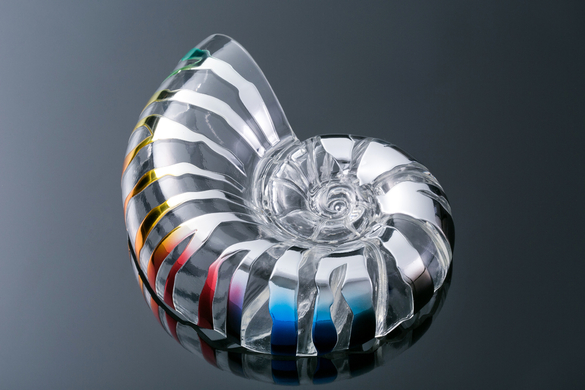
Nautilus Plating + painting
SECONDARY DECORATION
INAC provides decorative processing services that transform transparent 3D printed prototypes into effective tools for technology PR and presentation of internal mechanisms and structures of newly developed products. The Nautilus model demonstrates our capabilities in combining multiple finishing techniques to create visually striking presentation pieces.
Nautilus Model: Combined Decoration Techniques
The Nautilus model is manufactured using transparent stereolithography with TSR-829 material, INAC’s moisture-resistant highly transparent 3D printing resin. After the SLA printing process, the model receives aluminum evaporation plating followed by colorful gradation painting to create a distinctive visual effect that highlights both the transparent internal structure and the decorative exterior finish.
Aluminum Evaporation with Gradient Coloring
This decoration approach combines aluminum vapor deposition plating with gradient color painting techniques. The aluminum evaporation creates a reflective metallic surface, while the gradient coloring adds depth and visual interest. This combination of decorations is particularly effective for exhibition models and technology demonstrations where both aesthetic appeal and technical communication are important.
Applications for Presentation and PR
Models with secondary decoration processing serve as effective tools for technology PR activities and presentations showcasing the internal mechanism and structure of newly developed products. The transparent base material allows visibility of internal components, while the decorative finish enhances the professional appearance suitable for exhibitions, trade shows, and customer presentations.
Functional Enhancement Options
Helical inserts can be incorporated if necessary, adding functional thread capabilities to the decorative model. This allows presentation models to also serve functional purposes such as assembly demonstrations or mechanical testing.
Decoration Process Capabilities
INAC’s decoration process services offer a variety of decorative treatments including painting, aluminum vapor deposition plating, non-conductive vapor deposition plating, and resin chrome plating. Combinations of decoration methods can be applied according to project requirements. In-house color toning is implemented according to color samples, with painting service offered after gaining approval for toned test pieces.
Please feel free to contact us to discuss your decorative finishing and presentation model requirements.
Our experienced designers provide support from concept through completion for projects requiring secondary decoration and finishing.