Secondary Decoration
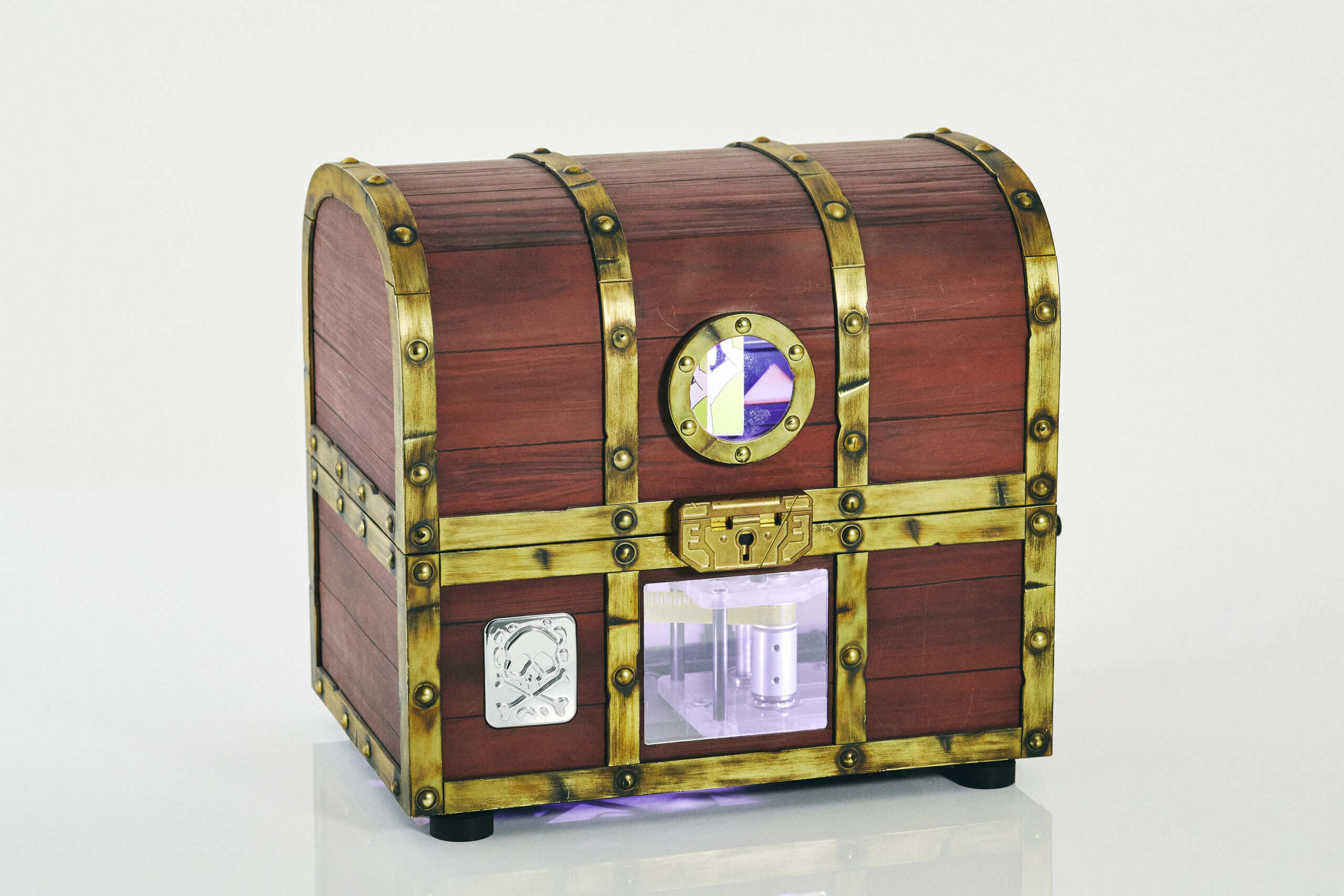
Treasure Chest
SECONDARY DECORATION
INAC’s treasure chest prototype demonstrates advanced decorative processing capabilities that replicate the appearance of wood and metal materials using plastic substrates. This model showcases the combination of machining, painting, and plating techniques to achieve realistic material simulations for display models and prototypes.
Wood-Like Painting on ABS
The chest body is manufactured from ABS machined components. Curvy shapes are machined into the surface to represent wood texture and grain patterns. Wood-like painting is then applied over these textured surfaces to create a convincing wood appearance. The combination of physical surface texturing and specialized painting techniques produces a realistic wood simulation that captures both the visual and tactile characteristics of natural wood materials.
Metal-Like Finishing
Metal components of the treasure chest utilize polycarbonate machining as the base material, followed by a multi-layer decorative process. Aluminum evaporation is applied to create the initial metallic surface. Clear color coating is then layered over the aluminum evaporation, followed by weathering painting to simulate the aged and oxidized appearance of antique metal hardware. This layered approach creates depth and authenticity in the metallic finish.
Machined Brass Accents
Key parts of the treasure chest are machined from actual brass material, providing functional metal components that complement the decorative finishes on the plastic substrates. The combination of real metal parts with decorated plastic components demonstrates INAC’s capability to integrate multiple materials and processes within a single prototype.
Secondary Decoration Techniques
This project exemplifies INAC’s variety of decorative processing options. Solid color painting, metallic finishes, clear coatings, and weathering effects can be combined to achieve specific visual goals. Painting variations available include solid color, metallic, clear, and gradient color effects. Composite decorations combining painting and masking on aluminum evaporation enable complex surface treatments.
Applications
These decorative finishing techniques are valuable for exhibition models, product mockups, gaming props, collectible prototypes, and any application where realistic material appearance is important but actual materials would be impractical due to weight, cost, or manufacturing constraints.
Please feel free to contact us to discuss your wood-like, metal-like, and decorative painting requirements.
Our experienced designers provide support for projects requiring decorative finishing from concept through completion.