POM Machining Service
Overview of POM (Polyoxymethylene)
Material Properties
| Density | 1.41 g/cm³ |
|---|---|
| Elongation at Break | 20–30% |
| Tensile Strength (Yield) | 60–70 MPa |
| Impact Strength (Notched Izod, 73 °F) | 1.0–2.0 ft-lb/in (approx. 20–40 J/m) |
| Hardness | Rockwell M90–M95 (approx.) |
| Flexural Strength | ~90 MPa |
| Heat Deflection Temp. (HDT @ 1.8 MPa) | ~230°F |
Note: Values may vary slightly depending on specific grades or formulations.
Benefits of POM
Low Friction & High Wear Resistance: Minimizes abrasion in moving parts, making POM ideal for gears, bearings, and similar components.
Excellent Dimensional Stability: Maintains tight tolerances under varying temperatures and loads, ensuring consistent performance.
Low Moisture Absorption: Retains mechanical properties even in humid or wet environments, reducing the risk of swelling or warping.
Good Chemical Resistance: Withstands a wide range of chemicals, allowing for versatile use in industrial applications.
Easy Machinability: Accommodates complex geometries and rapid prototyping, making it a cost-effective choice for precision parts.
INAC’s POM Machining Capability
POM Machining Portfolio
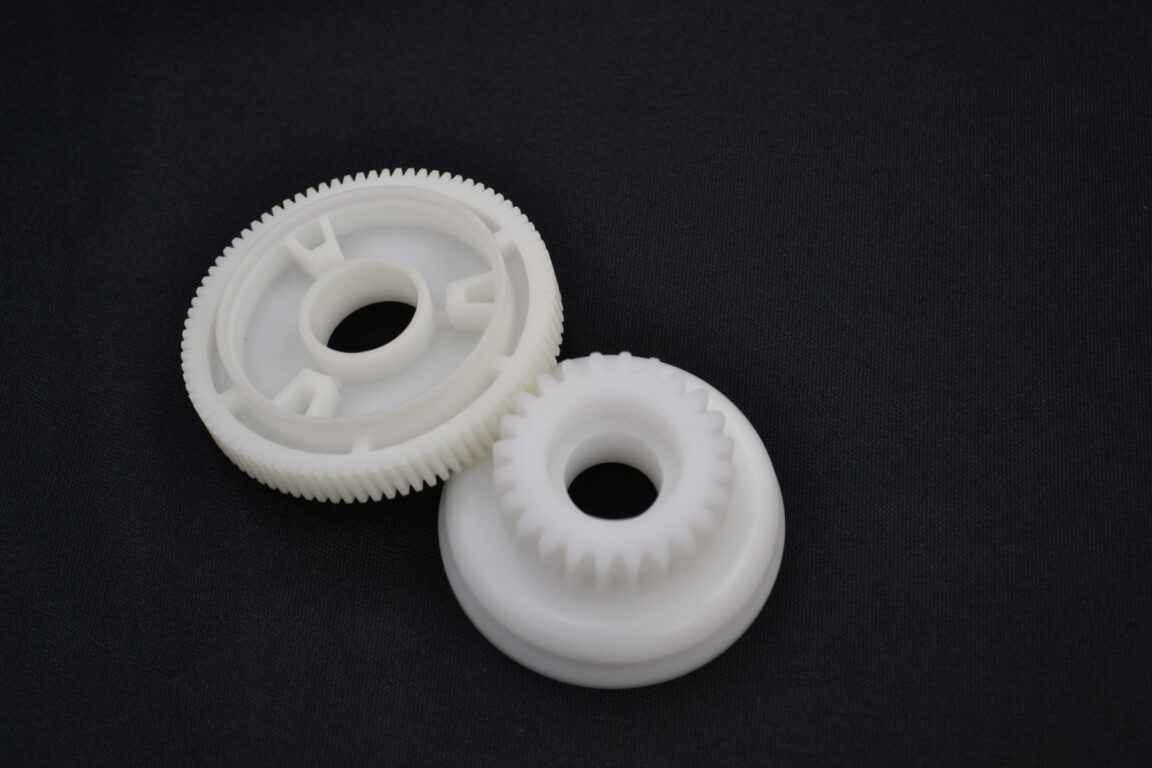
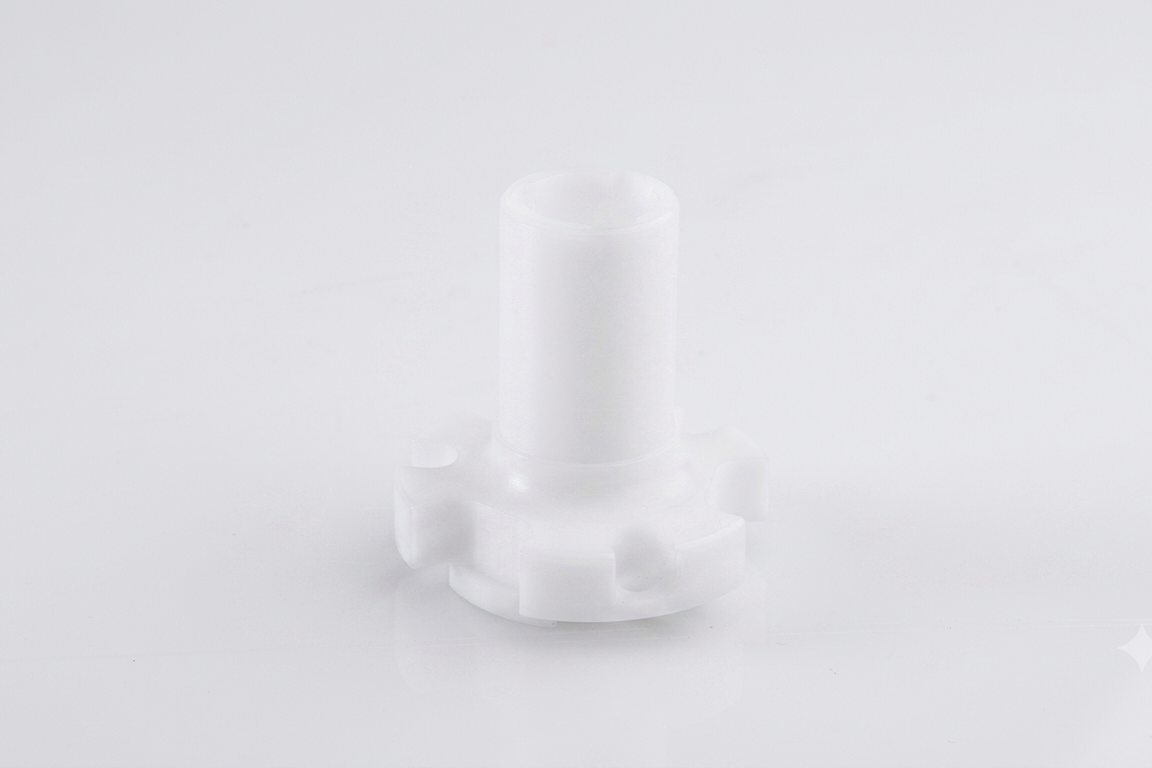
POM Machining Methods
CNC Machining
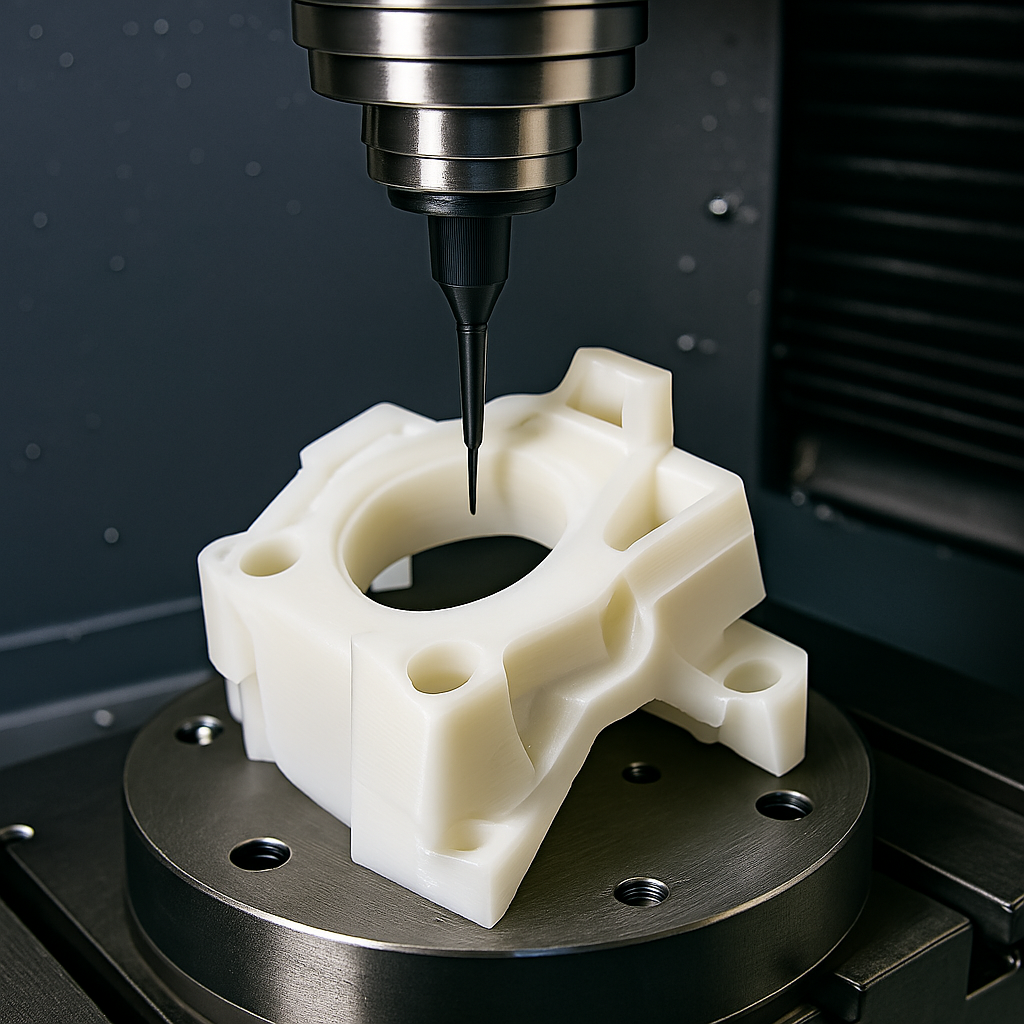
Ideal for creating complex shapes with tight tolerances.
POM’s low friction and good machinability help reduce tool wear and enhance surface finish.
Multi-axis milling allows for rapid prototyping as well as production of intricate parts.
Lathe Processing
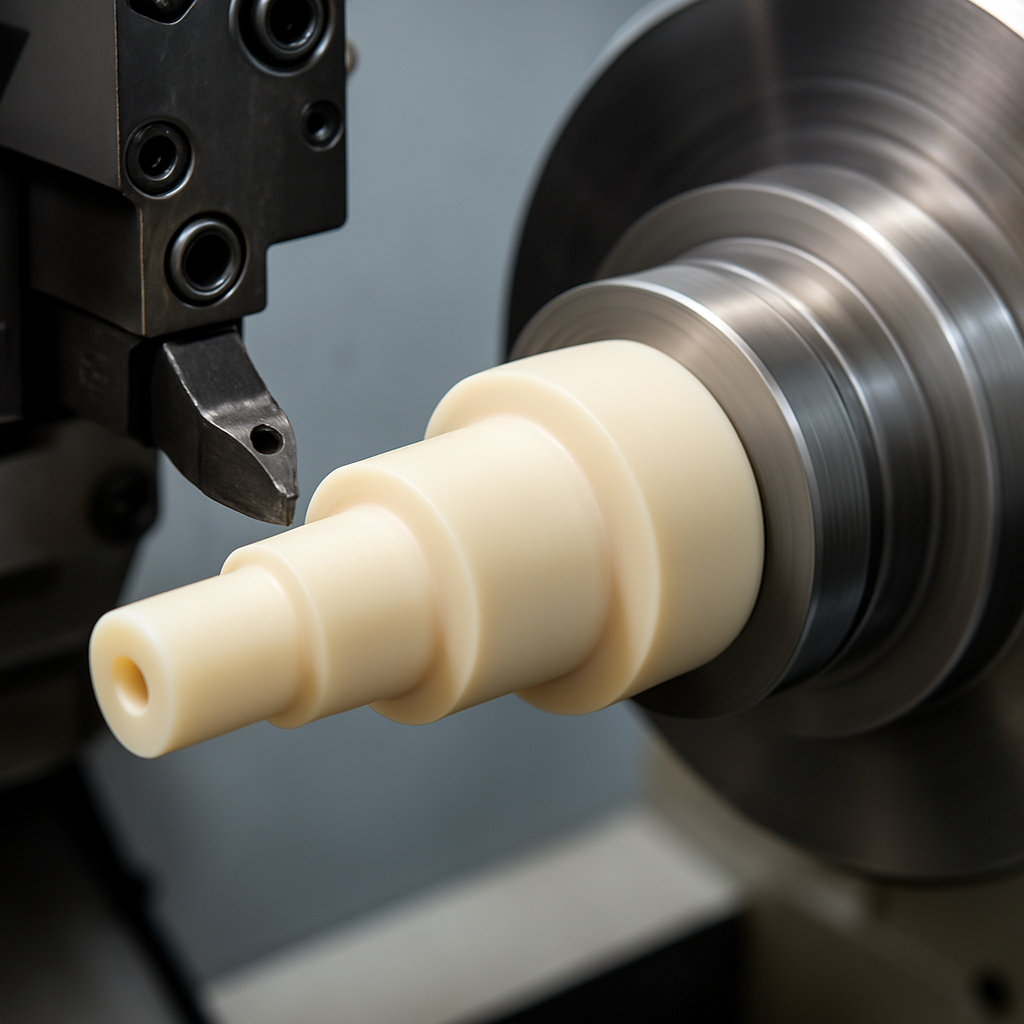
Best suited for cylindrical or rotational components like shafts and bushings.
POM’s stability and consistent chip formation make it easy to achieve precise diameters and smooth surfaces, ensuring reliable performance in moving assemblies.
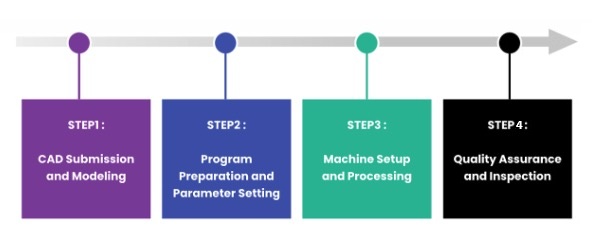
Flow of ABS Machining
FAQ about INAC's POM Machining Service
A: We work with a wide range of POM (acetal) grades, including homopolymer and copolymer variations. Depending on your project’s strength, stiffness, or chemical resistance requirements, our team can recommend the most suitable grade.
A. Our typical lead time for POM prototypes is around 5–10 business days, depending on part complexity and finishing requests. If you have an urgent deadline, let us know—expedited services may be available.
A. Yes. Thanks to our advanced CNC equipment and expert machinists, we can consistently produce POM parts with tight tolerances, ensuring accurate dimensions and superior functionality.
A. Absolutely. Whether you need a single test piece or a short run of components, our flexible manufacturing approach accommodates various order sizes while maintaining quality and consistent turnaround times.
Start Machining Today with INAC
Put our expertise in precision POM machining to work on your next project.
Contact us to discuss your requirements, explore material options, and get a fast quote—so you can move from concept to completion with confidence.
Guide to POM Machining
What Is POM (Polyoxymethylene)?
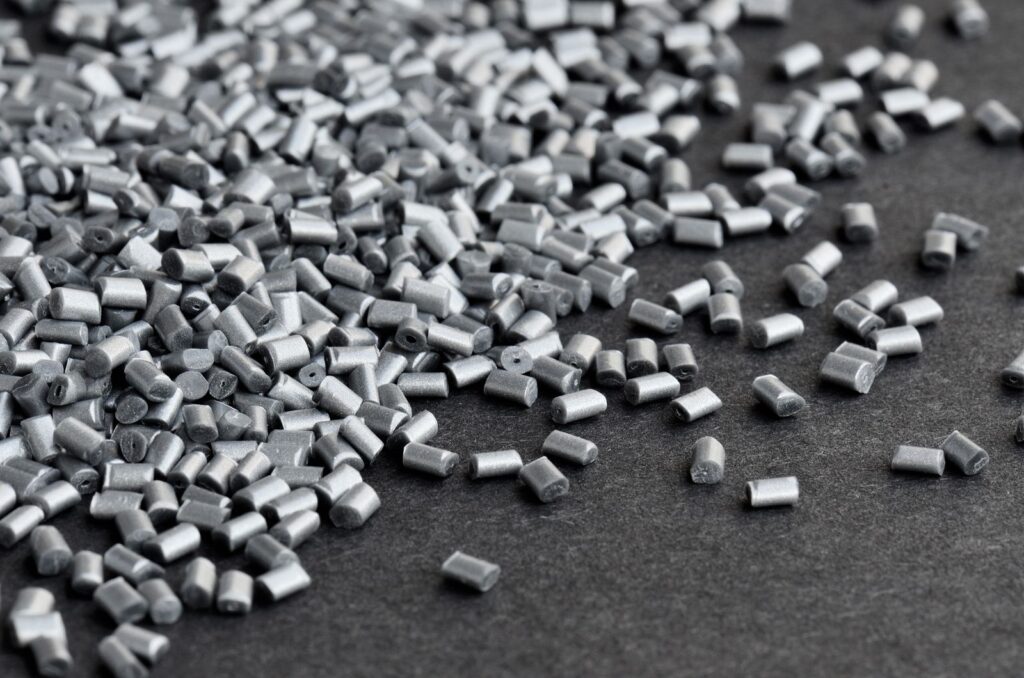
Polyoxymethylene (POM), also referred to as acetal, is an engineering plastic known for its low friction, high wear resistance, and exceptional dimensional stability.
This makes it an excellent choice for mechanical parts like gears, bearings, and bushings, especially in applications where consistent performance and tight tolerances are crucial.
Additionally, POM’s low moisture absorption and broad chemical resistance help it maintain its strength, shape, and functionality in a variety of challenging environments.
Grades of POM Material
| Grade | Value |
|---|---|
| Homopolymer POM (e.g., Delrin®) | Features high mechanical strength and stiffness, making it ideal for gears, bearings, and structural components. It delivers excellent machinability and surface finish, although it may exhibit centerline porosity that requires careful design. |
| Copolymer POM (e.g., Celcon®) | Provides enhanced chemical resistance and a more uniform internal structure, minimizing porosity issues. This makes it well-suited for applications exposed to hot water, harsh solvents, or repeated moisture cycles while maintaining good dimensional stability. |
| Glass-Filled POM | Reinforced with glass fibers to increase rigidity, load-bearing capacity, and dimensional stability. Often used in automotive or industrial applications where higher structural strength is necessary. |
Applications of POM Machining
Gears & Bearings
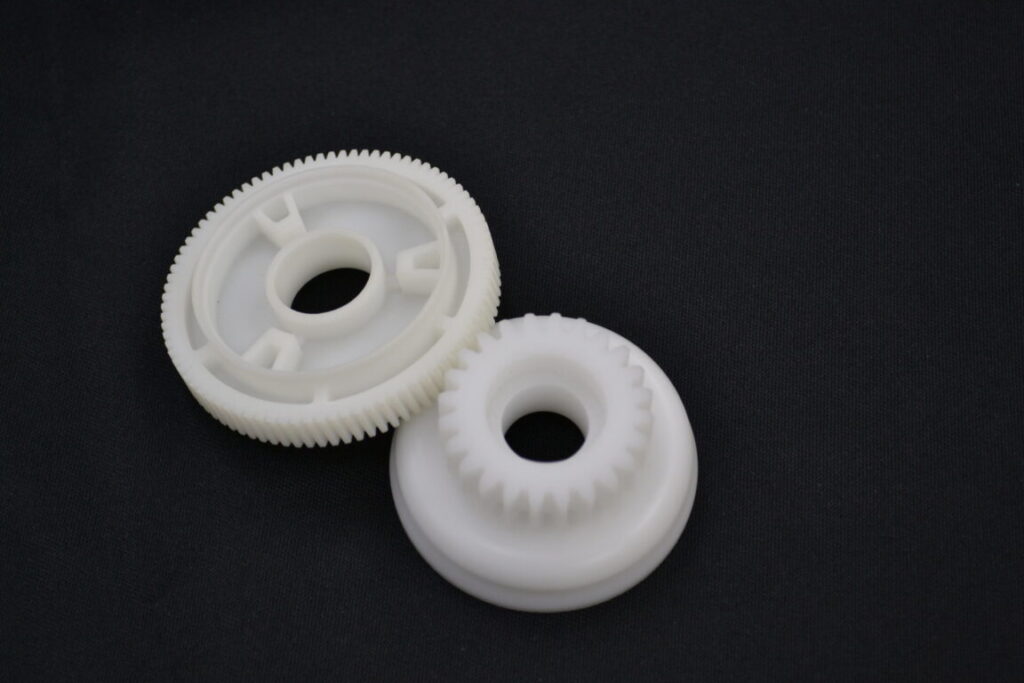
POM’s low coefficient of friction and excellent wear resistance make it an ideal material for gears, bearings, bushings, and other rotating or sliding components.
Its self-lubricating properties help reduce maintenance costs and extend the service life of these parts, especially in high-cycle mechanical systems.
Automotive & Aerospace

Thanks to its dimensional stability and resilience against heat and moisture, POM is frequently used in fuel system parts, door lock assemblies, seatbelt mechanisms, and actuators.
In the aircraft industry, its low weight and mechanical reliability support various interior mechanisms and hardware where an efficient strength-to-weight ratio is required.
Industrial Equipment
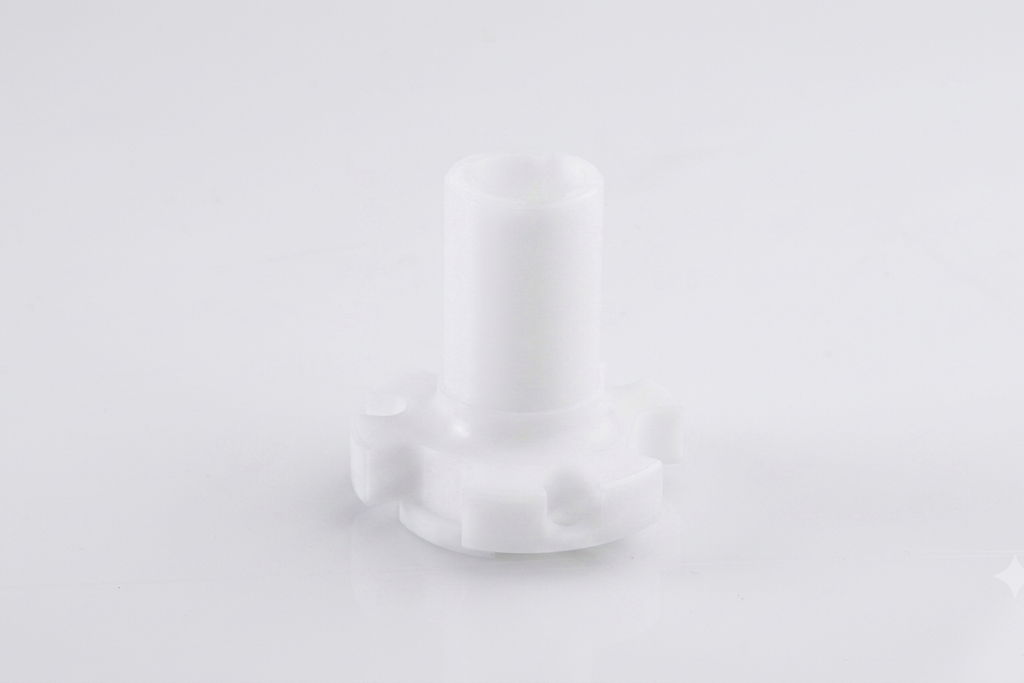
POM’s chemical resistance and low moisture absorption help preserve its structural integrity in harsh production environments, such as food processing or chemical handling.
Conveyor systems, pump components, valve parts, and fittings made from POM maintain their performance over long operating cycles with minimal degradation.
Comparing POM to Other Machinable Plastics
| Plastic | Description |
|---|---|
| ABS (Acrylonitrile Butadiene Styrene) | – Good Impact Strength: The butadiene content provides toughness and shock resistance. – Easy Processing: Commonly injection molded; also suitable for 3D printing (FDM). – Balanced Properties: Offers moderate strength, decent chemical resistance, and good dimensional stability. |
| PC(Polycarbonate) | – High Impact Resistance: Often used for safety shields, machine guards, and protective screens. – Optical Clarity: Up to 90% light transmission, though prone to scratching without hard coatings. – Heat & Flame Resistance: Can withstand elevated temperatures; available in flame-retardant grades (UL 94 V-0). – Dimensionally Stable: Retains shape under load, making it suitable for precision parts. |
| Acrylic (pmma) | – Excellent Transparency (~92% light transmission) with a glass-like appearance. – Lightweight & Weather Resistant: Resists yellowing and cracking outdoors better than polycarbonate. – Easy Fabrication: Can be thermoformed, laser-cut, or polished for display-quality finishes. |
| PP (Polypropylene) | – Lightweight & Affordable: One of the lowest densities among engineering plastics, making it cost-effective. – Good Chemical & Moisture Resistance: Does not absorb water readily, resists many acids and bases. – Flexible in Thin Sections: Used in living hinges. |
| Nylon | – Excellent Toughness & Wear Resistance: Ideal for moving or sliding parts. – Varied Grades: Nylon 6, 6/6, 12, etc., each offering different stiffness, moisture absorption, and temperature performance. – Good Fatigue Strength: Retains mechanical integrity under repeated stress. |
| PEEK (Polyether Ether Ketone) | – High Temperature Tolerance: Can sustain mechanical properties up to ~480°F. – Chemical & Hydrolysis Resistance: Suitable for harsh chemical environments; steam-sterilizable. – Biocompatibility: Certain grades used in medical implants. – Low Outgassing: Ideal for aerospace applications. |
| PPS(Polyphenylene Sulfide) | – High Thermal Stability: Can withstand continuous use at ~390–430°F. – Flame Retardant & Chemical Resistant: Excellent performance in corrosive and high-temperature conditions. – Good Dimensional Precision: Low coefficient of linear thermal expansion (CLTE). |
| PET(Polyethylene Terephthalate) | – Good Stiffness & Dimensional Stability: Suitable for precision mechanical parts. – Low Moisture Absorption: Minimizes swelling or warpage. – Chemical Resistance: Resists oils, solvents, and mild acids. |
| PBT(Polybutylene Terephthalate) | – Good Electrical Insulation: Ideal for connectors, switches, and other E/E parts. – Dimensional Stability: Low shrinkage, low moisture absorption, good for tight tolerances. – Chemical & Heat Resistance: Withstands automotive fluids and moderate temperatures ~302–320°F. |
If you have something you want to make, please contact us. Even a rough idea is OK. We will give shape to your idea and deliver it to you. Please feel free to contact us.